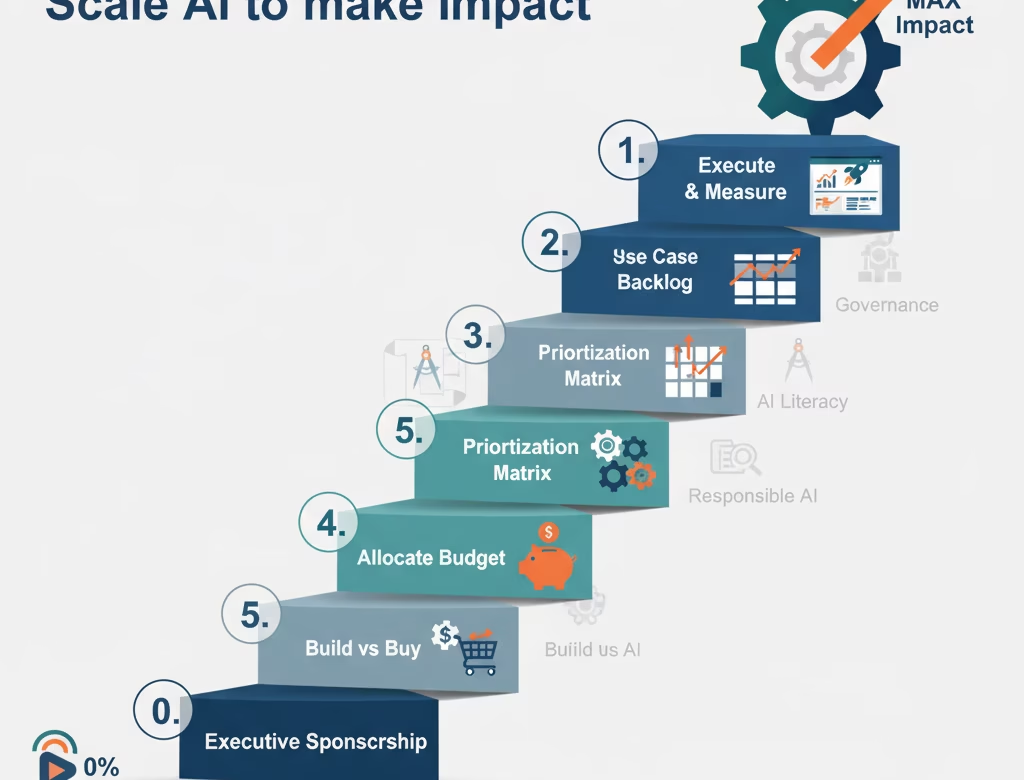
AI is hard to understand. AI is extremely hard to execute properly. AI is unbelievably hard to turn into a cultural phenomenon inside an organisation. And without Executive sponsorship — this isn’t happening.
Every meaningful AI transformation starts at the top.
The C-suite must embody and champion the vision of AI in the organisation. No exec-sponsorship means AI is likely to not be successful in the company.
While CEOs and Boards are discussing AI, how many of them truly understand AI and the impact it can bring?
I have served as the Chief Data Officer on the Executive Board of a Publicly traded company, and I am quite familiar with C-suites. I can confidently say that I have met only a handful of C-suites and Boards (or Non-Executive Directors: NEDs for that matter) that understand the impact of AI, and the steps required to make it successful.
C-suites need strong AI representation. They need to be cheerleading AI.
Even when the C-suites are enthusiastic about AI, they may not understand it enough to be champions and vocal supporters of the teams doing AI. And they may also not be aware of the risks of AI, or of the Responsible AI principles to follow, or aware of how to follow them.
Often, the task of executing on AI falls on data science teams, innovation labs, or IT departments. Without a clear C-suite sponsor, without the vocal and active support of the C-suite, AI cannot flourish in an organisation. This disconnect can stall momentum before it even begins.
To succeed, AI must be a leadership agenda item, not a technical project. As goes the C-suite, so goes the company.
The Role of the C-Suite in building an AI capable culture
The journey to AI maturity is as much cultural as it is technological. A truly data-informed and AI capable enterprise requires visible executive commitment.
When leaders talk about AI and use data to illustrate their point in board meetings, when they use deep queries on their data and their dashboards in their planning sessions, and challenge assumptions with evidence generated from AI Agents that were quickly built and deployed, they send a powerful message: “This is how decisions are made here.”
But when leadership neglects topics like Responsible AI, data quality, governance, or impactful planning of AI applications, it signals that these priorities are optional and the organization will follow suit.
AI transformation starts with an AI mindset at the C-suite.
The Commitment characteristic of an AI-savvy Leadership
To avoid common pitfalls and drive lasting transformation, organisation Executives must commit to a few key principles. These form the backbone of sustainable AI leadership.
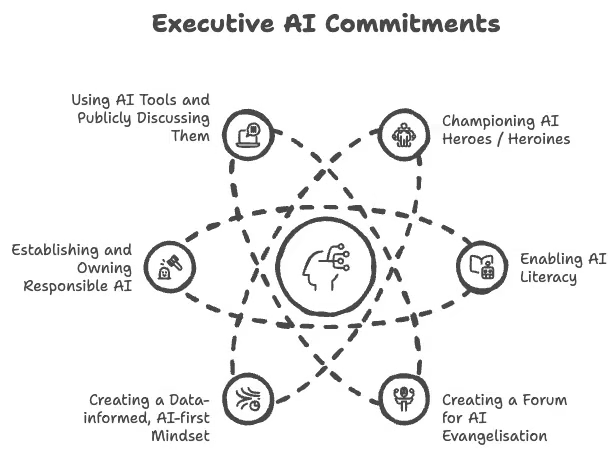
The commitments the Executives must make include:
- Using AI tools and publicly discussing them
- Championing AI Heroes / Heroines
- Enabling AI literacy and Empowerment
- Creating a forum for AI evangelisation
- Creating a Data-informed, AI-first mindset
- Establishing and owning Responsible AI
Lets discuss these topics in a little more detail, now.
Using AI Tools and Talking About Them
Nothing accelerates adoption like visible leadership participation.
When the C-suite uses AI-powered forecasting to inform quarterly planning, or the an executive highlights how machine learning improved campaign performance, employees listen. They feel empowered to also use AI. Execs demonstrating Responsible AI principles can make the entire company feel empowered.
Executives should:
- Get educated about AI from a C-suite perspective.
- Use AI tools and be authentic about it.
- Share personal AI use cases during town halls or all-hands meetings.
- Encourage peer leaders to do the same.
This “walk the talk” approach creates a trickle-down effect of credibility, curiosity, and confidence across the enterprise.
Championing AI Heroes and Heroines
Everybody in a company will observe who gets the accolades and why. And when those who took initiative to test out AI are supported and publicly so.
When someone tries out AI, does so methodically and using Responsible AI principles, they deserve to be lauded publicly. Regardless of whether their efforts succeeded or not. If they succeeded, then we must celebrate it. If they failed, we must learn from it and laud their initiative.
Demonstrate a Data-Informed Mindset
AI adoption begins by changing how leadership thinks and decides. Executives must model evidence-based decision-making by:
- Asking for data before approving strategies.
- Challenging intuition with insight.
- Using analytics dashboards and AI tools in executive meetings.
This doesn’t mean abandoning experience; it means augmenting it with evidence. When leaders adopt this mindset, teams follow naturally, making data fluency a part of the organizational DNA.
Establish and Own a well thought out Responsible AI Policy
Responsible AI isn’t a compliance checkbox, it’s an enabler to ensure that AI can be deployed and used safely.
Fairness, transparency, and accountability must underpin every AI decision. To operationalize this, executives should:
- Create and endorse a Responsible AI Charter that is an enabler.
- Ensure AI systems are auditable, explainable, and bias-aware.
- Establish ethics boards or review committees for high-impact use cases.
Crucially, executive ownership is key. Governance cannot be left to technical teams alone. AI accountability begins in the boardroom.
Empower Learning and Create Incentives
AI transformation thrives when learning becomes a company-wide movement.
Executives must ensure employees have the resources, time, and motivation to engage with AI tools confidently. This can include:
- Funding AI literacy programs across functions.
- Encouraging on-the-job experimentation with AI systems.
- Recognizing and rewarding teams that drive measurable outcomes with AI.
- Embedding AI-related KPIs into performance reviews.
When AI learning is both encouraged and rewarded, it ceases to be optional and becomes organizational muscle.
Finally: Why Executive Sponsorship Is Non-Negotiable
AI is a redefinition of how enterprises operate, compete, and innovate. With executive sponsorship, AI initiatives that were isolated experiments become strategic accelerators that shape the company’s future.
Leadership cheerleading is the catalyst that turns AI into impact.
As we continue this series, we’ll explore the tactical steps required to translate this leadership vision into a scalable AI implementation roadmap.
Executive sponsorship isn’t just the first step; it’s the foundation upon which every other step depends.